Cultivating relations with key European partner states is a priority of Ms Häberli-Koller’s international activities during her presidential year. Switzerland and Poland have enjoyed very good relations for many years, including intensive exchanges at the cultural and economic level. Poland also receives the most support from the second Swiss contribution to selected EU member states. Since Russia’s aggression against Ukraine began on 24 February 2022, Poland has taken in more than 1.5 million displaced people, making it the primary destination for Ukrainian refugees. During her visit to Warsaw, the Council of States president also expressed her respect for the exceptional solidarity of the Polish people and the commitment of the Polish authorities.
The Council of States delegation was received on Monday, 27 March, in Warsaw by Professor Tomasz Grodzki, Marshal of the Senate of Poland, who presides over the upper house of the Polish Parliament. On Tuesday, 28 March, the delegation met with Elżbieta Witek, the Marshal of the
Sejm (the lower house of the Polish Parliament), and with members of the Polish–Swiss Friendship Group. The main topic of all the talks was Russia’s war of aggression and the measures taken by the Western community of states to support Ukraine at a military and humanitarian level. Switzerland’s position regarding the re-export of war materiel was also discussed in this context.
In connection with the second Swiss contribution to selected EU member states, a meeting also took place with State Secretary of the Ministry for Development Funds and Regional Policy Małgorzata Jarosińska-Jedynak. In addition, the delegation visited an infrastructure project in the city of Legionowo, which was realised as part of Switzerland's enlargement contribution. The delegation also visited a production site of Stadler Polska in Siedlce.
On Wednesday, 29 March, the delegation travelled to Berlin. Germany is Switzerland’s largest trading partner, and the two countries also maintain diverse and close relations in a wide range of political, scientific, cultural and social endeavours. Ms Häberli-Koller was received in Berlin by the president of the German Bundesrat, Dr Peter Tschentscher, who is also President of the Senate and First Mayor of the Free and Hanseatic City of Hamburg. In addition, talks were held with the vice-president of the German Bundestag, Wolfgang Kubicki, as well as with members of the German-Swiss Parliamentary Group. The delegation also exchanged views with Minister of State Anna Lührmann of Germany’s Federal Foreign Office, Parliamentary State Secretary Rita Schwarzelühr-Sutter of the Federal Ministry of the Interior and with the chair of the Konrad Adenauer Foundation, Professor Norbert Lammert. Finally, the delegation visited the Merantix AI Campus Berlin and the Stasi Museum.
The talks in Germany focused on bilateral relations and the impact that the current challenges in Swiss-EU relations are having on collaboration between Switzerland and Germany, particularly in the economic and research sectors. The news that the Swiss Federal Council intends to draw up the key points of a negotiating mandate with the EU met with great interest among those participating in the talks. Other topics included the German ‘Zeitenwende’ (turning point) in foreign and security policy, Switzerland’s position on the re-export of war materiel and the latest developments concerning Credit Suisse.
The Council of States president was accompanied on the trip by Council of States members Eva Herzog (SP, BS), Lisa Mazzone (Greens, GE), Andrea Caroni (FDP, AR), Stefan Engler (The Centre, GR) and Werner Salzmann (SVP, BE).
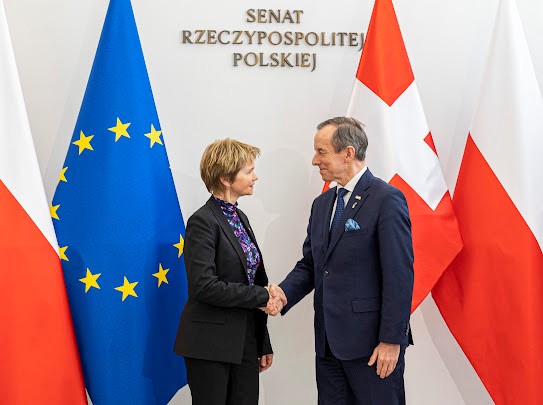
In Warsaw: President of the Council of States Brigitte Häberli-Koller and Marshal of the Senate of Poland Professor Tomasz Grodzki
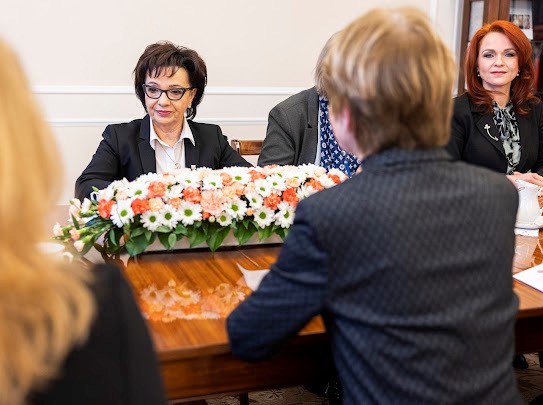
The Council of States president in talks with Elżbieta Witek, Marshal of the Sejm
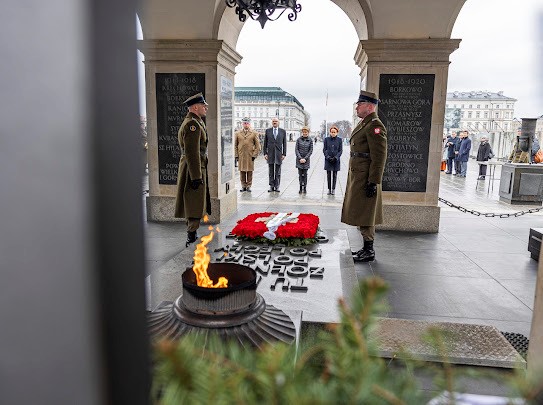
Laying a wreath at the Tomb of the Unknown Soldier in Warsaw
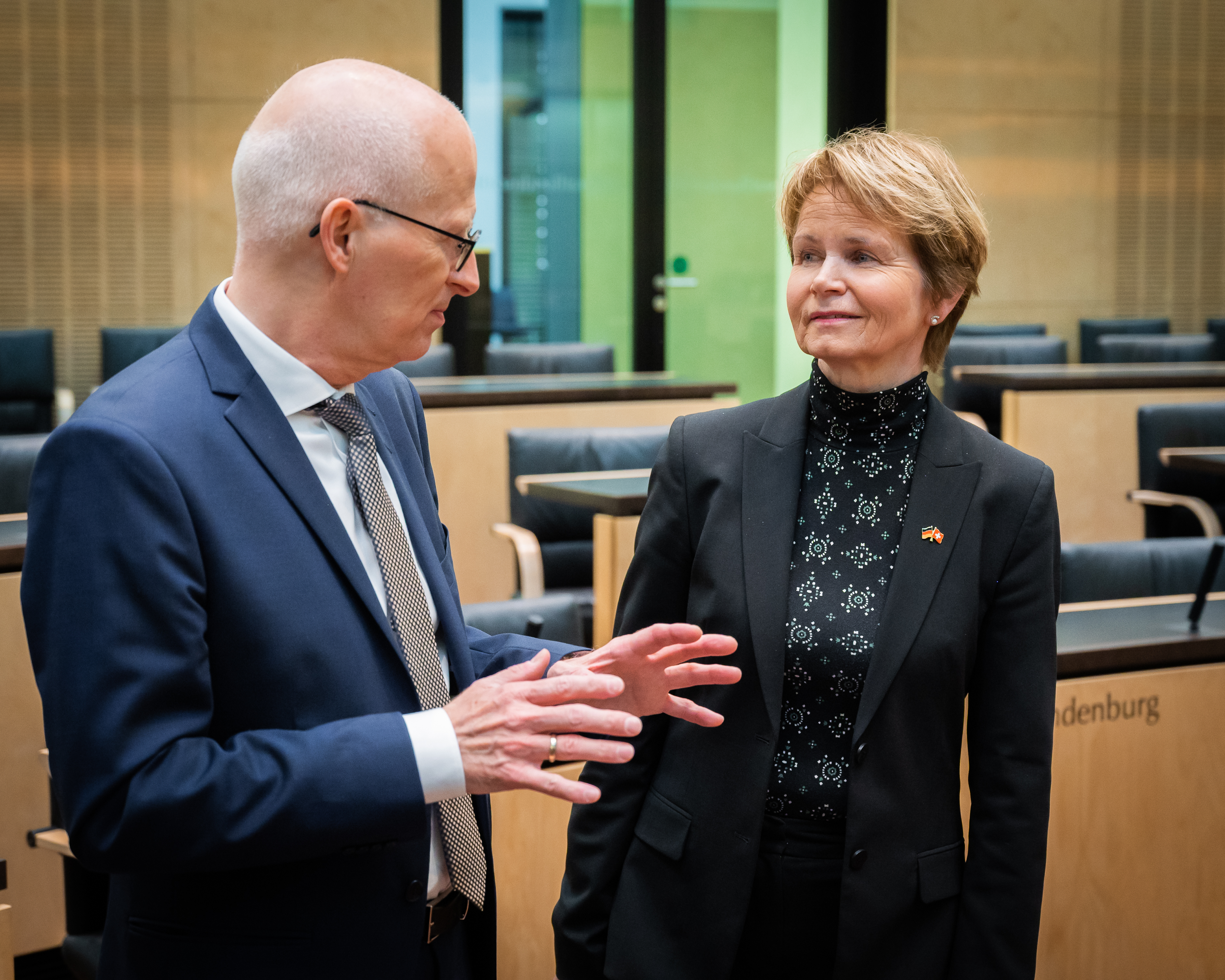
In Berlin: President of the Council of States Brigitte Häberli-Koller and President of the German Bundesrat Peter Tschentscher in talks
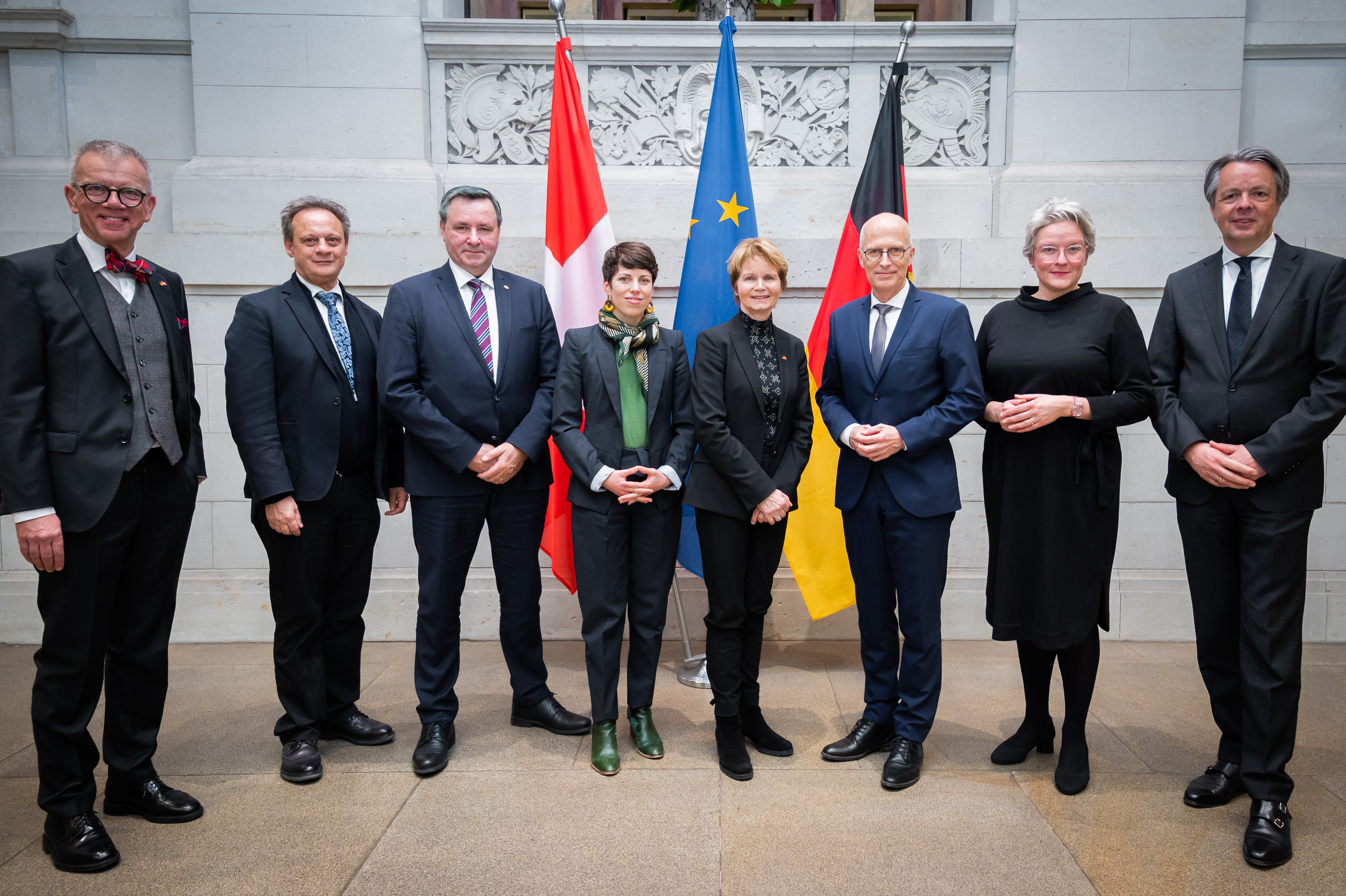
Left to right: Ambassador Paul Seger, Council of States members Stefan Engler, Werner Salzmann and Lisa Mazzone, Council of States President Brigitte Häberli-Koller, President of the German Bundesrat Peter Tschentscher and staff